The Daxophone

An acoustic synthesizer

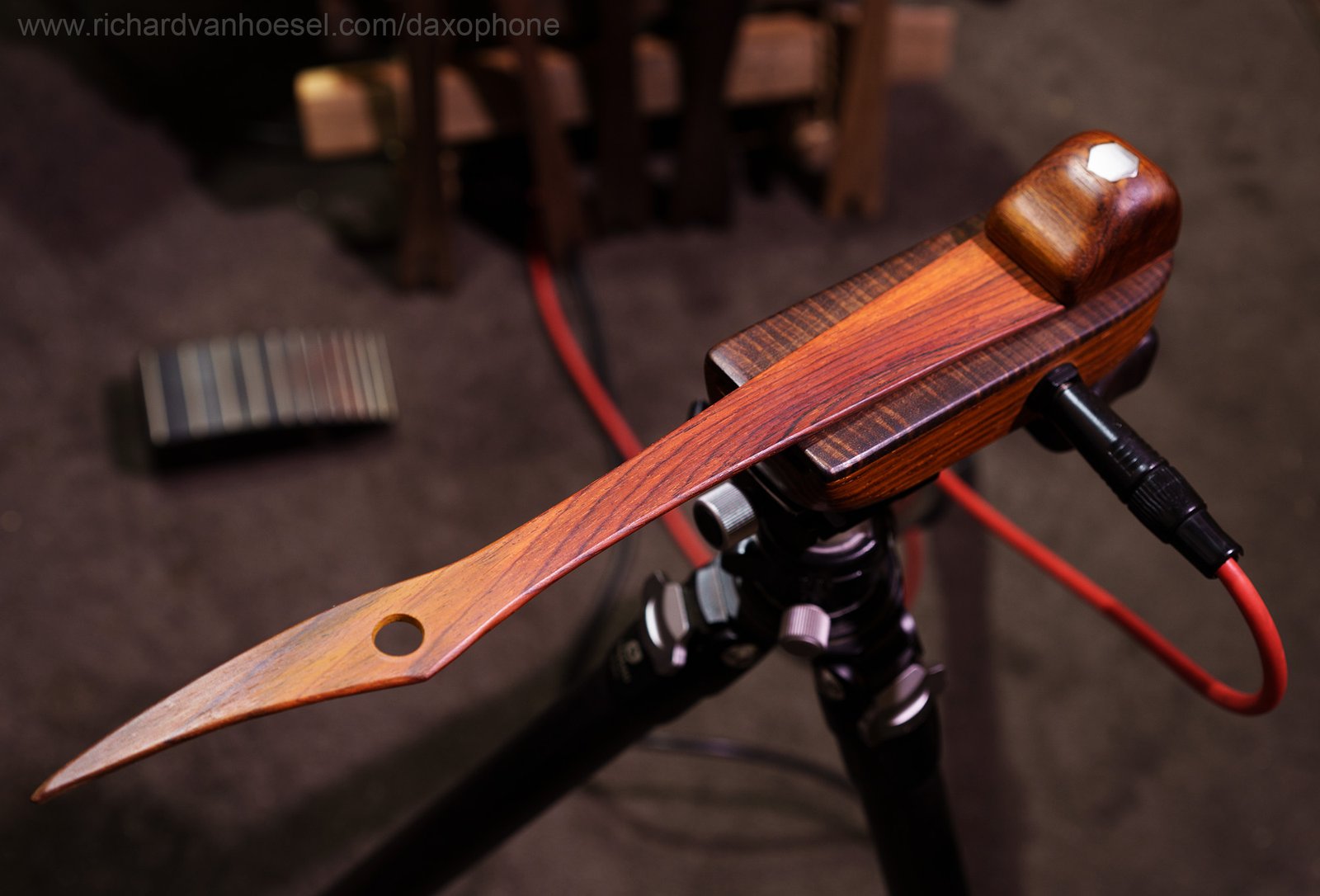
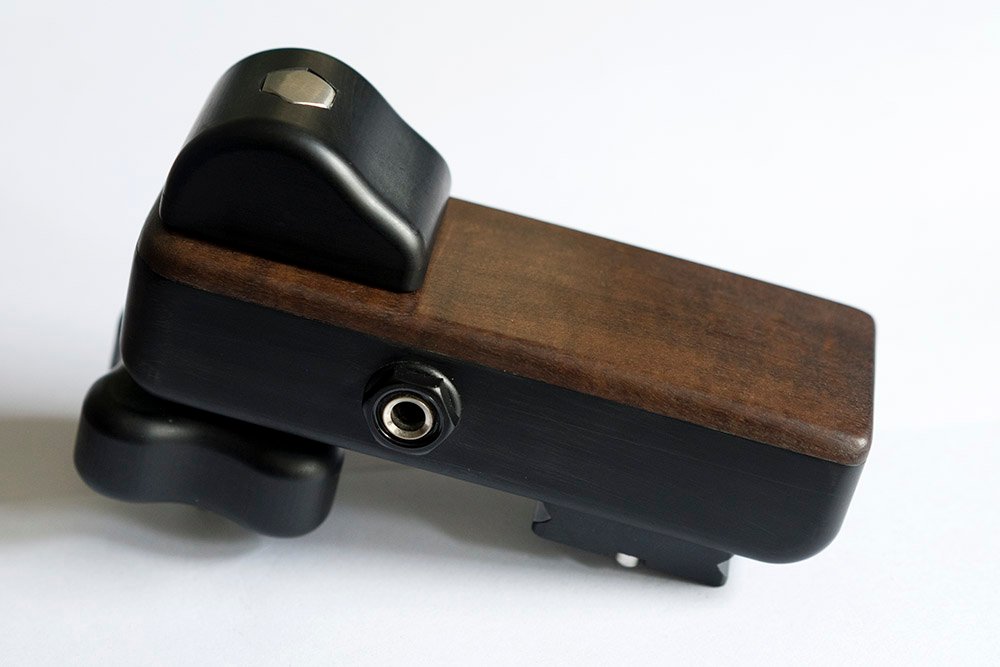
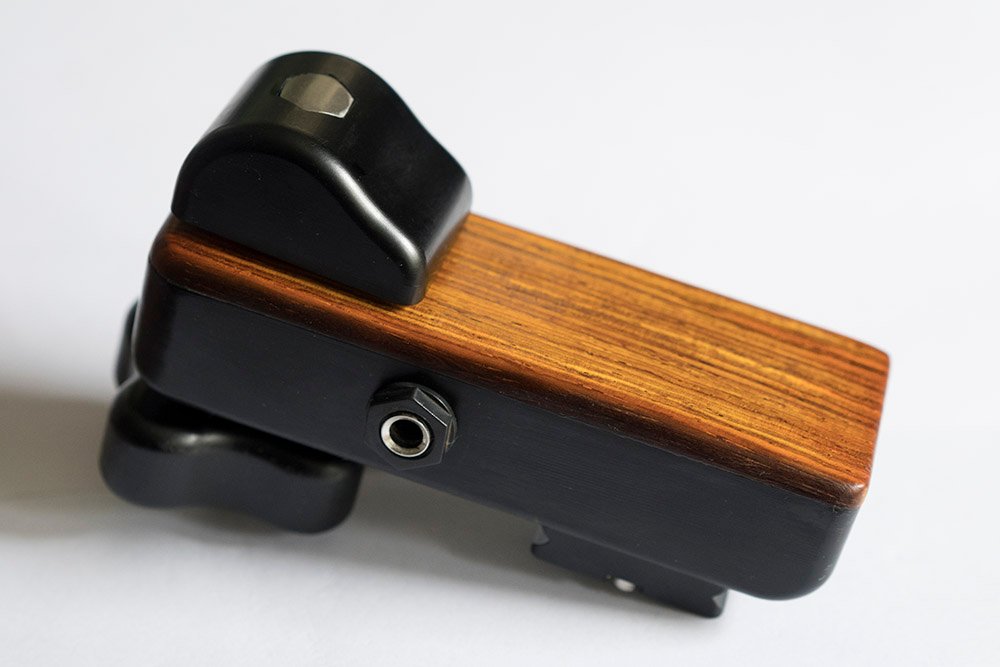
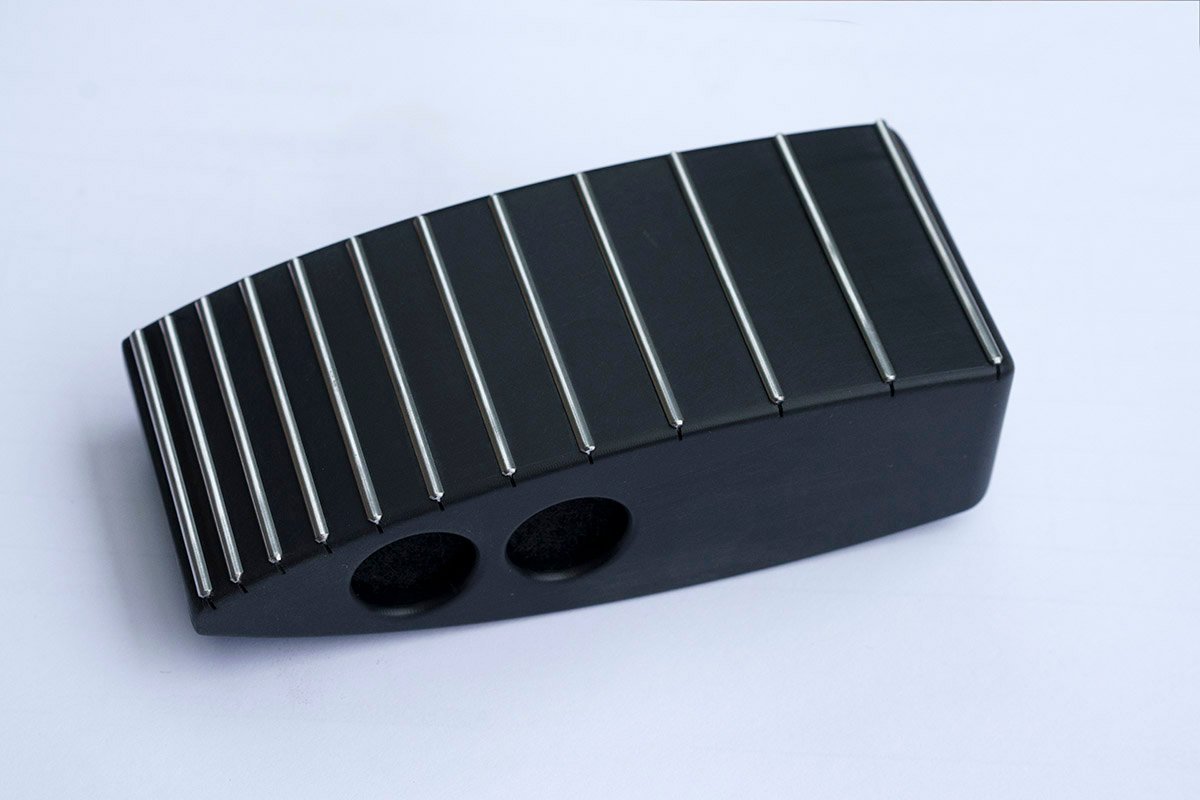
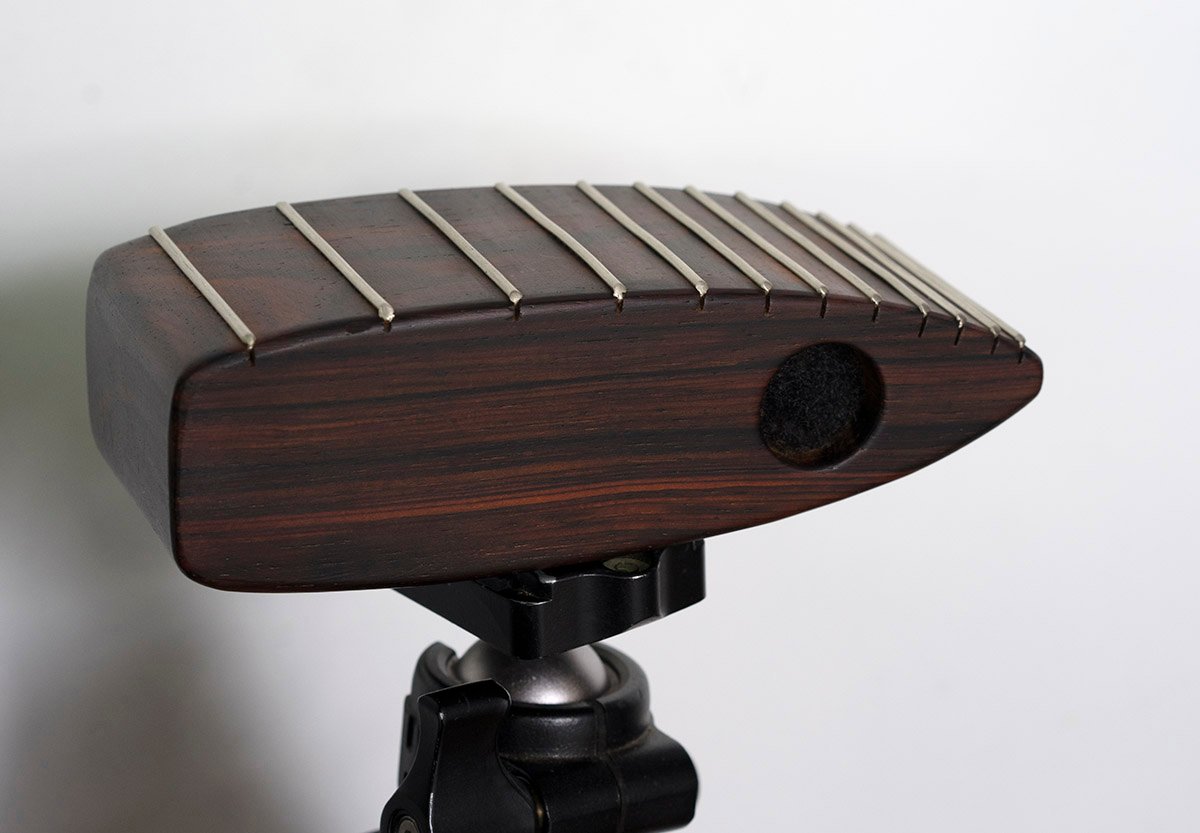
If you like weird sounds, you will love the daxophone. This unusual instrument was invented by Hans Reichel about three decades ago. It consists of a thin strip of wood called a tongue that is usually bowed, and is mounted on a soundbox with contact microphones. Pitch and timbre are controlled by moving a rounded wooden ‘wedge’ called a dax to different positions along the tongue. I have carefully studied and  extended Reichel’s design, and describe my approach below. HERE is a short video demonstration of one of my daxophones with a simple straight tongue. The audio was recorded directly from the daxophone’s output  without any effects or room reverberation.
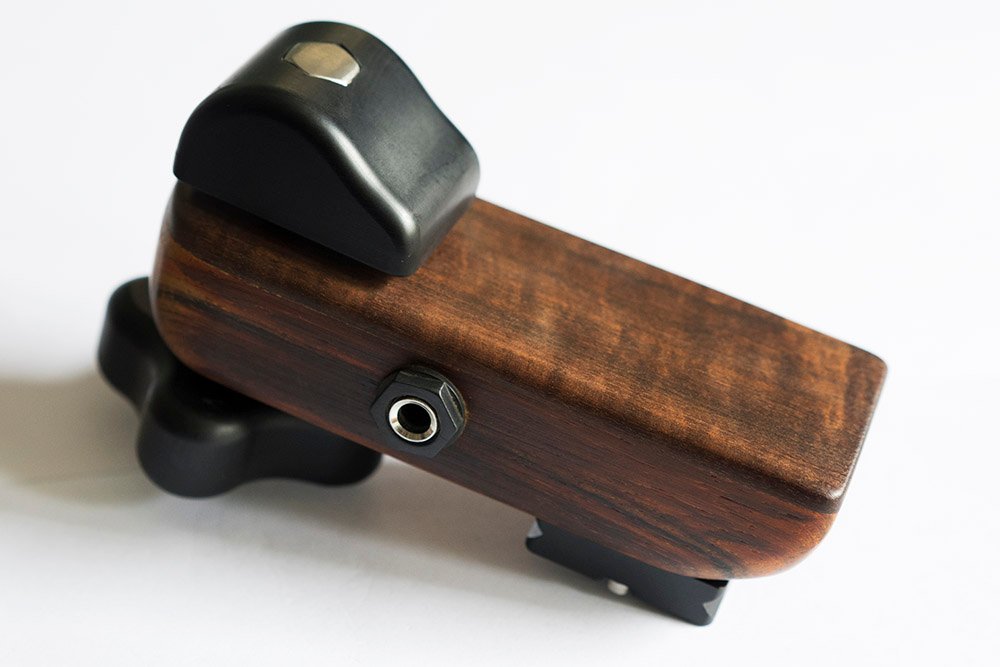
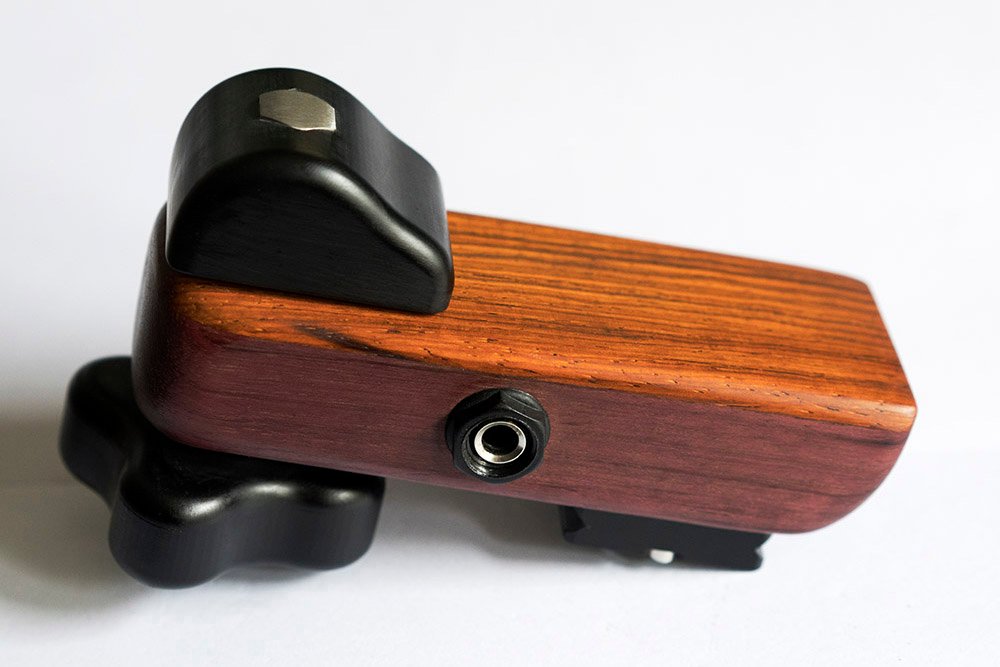
Probably the most important change I’ve made is the use of a subtly contoured soundplate, which is the top plate of the soundbox where the contact microphones are mounted. This greatly improves the sustained contact between flat tongues and the soundbox regardless of where you press with the dax or bow along the tongue. When using a flat tongue with the original soundbox design (and most daxophones currently available)  you are very likely to lose good contact and hear a large drop in volume when playing in certain regions. 
Hans Reichel’s solution to this problem was to  painstakingly sand the underneath side of every tongue he made so it was slightly contoured, which is a very time consuming process. In my approach using a contoured soundplate, that process needs to be done only once (by me). So making your own tongues simply requires that they are flat on the underneath side. The contour I have developed also reduces the likelihood of ‘buzzing’ that flat soundplates can introduce, and provides a ‘big bottom bass’ sound. You will get consistent volume even for an up-bow without a dax pushing down on the tongue, for which flat surfaces often suffer large volume drops because the tongue is lifted away from the soundbox.
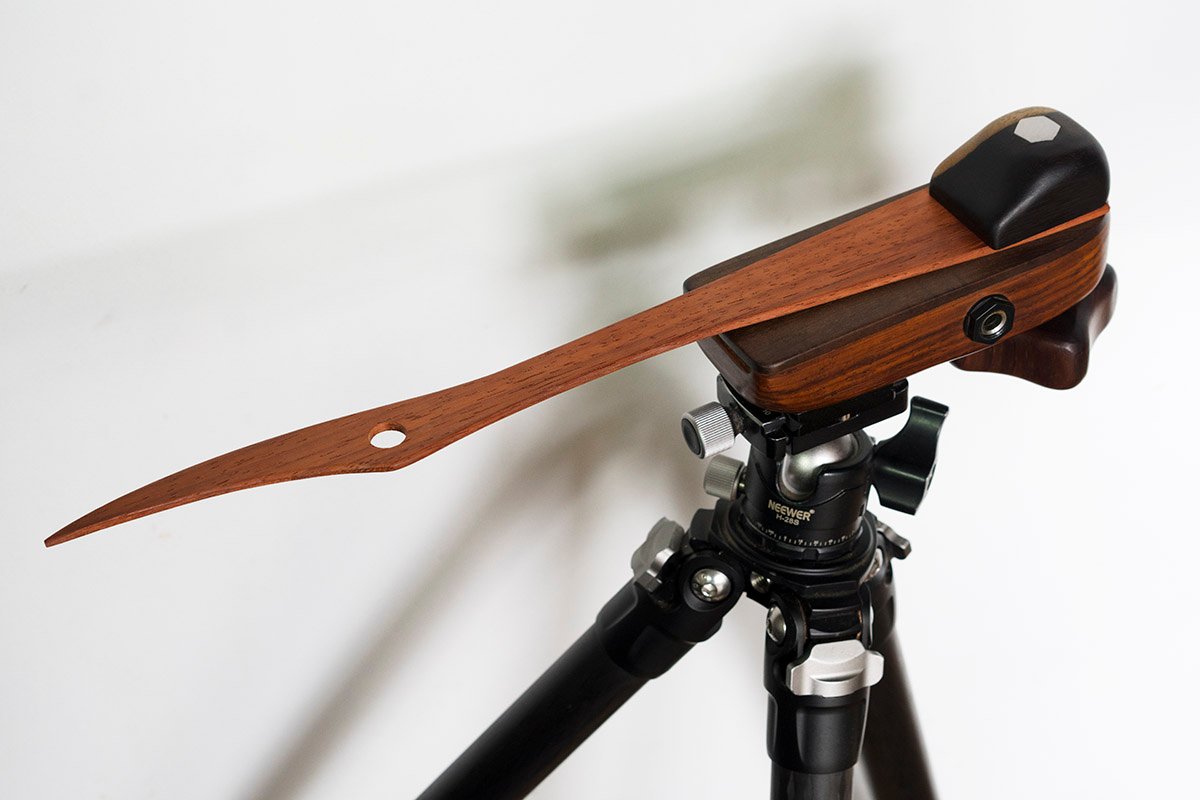
I have elected to do away with the fixed tripod used in Reichel’s design and instead use an arca swiss mounting plate. These plates are used in the professional camera/video industry to mount heavy equipment to tripods. A big advantage of this approach is that you can quickly mount or dismount the daxophone on the tripod. Particularly if you use a ‘ballhead’ on your tripod you can also easily adjust the angle of the daxophone to match your preferred playing style and seating (or standing) position. This is much more comfortable than mounting the dax on a table (or piece of board) with a clamp. Having the daxophone at the wrong angle can significantly impede your playing because, like with string instruments, good technique requires the right posture that lets you use your arm and hand weight fluently. You will find it much easier to get a wide range of sounds when the angle is adjusted correctly.
Here’s an illustration of the arca swiss tripod mount system with one of my older soundbox designs:
To mount the daxophone you will need a tripod, preferably with legs that can open at  various angles (for better stability use a wider angle). The tripod will need an arca swiss head at the top of the tripod, preferably a ballhead for quick and easy adjustments of the soundbox playing angle. Ballheads with larger diameter are more stable with heavy camera equipment, but even the inexpensive 28mm ballhead shown above works very well with the daxophone. Part of the reason for that may be that it is a nice low-profile ballhead. You will also require a double bass bow. A German style bow may be preferable to a French one because it has more space
between the wood and the hair, allowing a wider range of bowing techniques and a somewhat firmer grip. You will also need some rosin (‘pops’ bass rosin works really well), and a sense of adventure!

Buy Now (currently available for shipping within 1 week)

You can buy a complete daxophone that includes a soundbox, high density dax (for tonal stability), and three tongues using the Buy Now buttons below. Prices are in Australian Dollars, and are inclusive of free world wide shipping. Contact me for pricing if you want more than three tongues.  
My daxophones are professional quality instruments with careful attention to detail, refined finishing, and using the most beautiful fine grained woods available anywhere. I have happy customers all over the world, and will make every effort to ensure you are too.
I also offer the option to buy this setup with a fretless dax for $80 less. If you’re new to daxophones, be aware that despite appearances, the fretted side of a standard dax is not actually in tune with anything.

Complete daxophone: soundbox, dax (fretted on one side), and 3 tongues AUD$1475

Complete daxophone: soundbox, fretless dax, and 3 tongues AUD$1395